In the world of personal finance, cash flow is the quiet hero behind every successful money strategy. Whether you’re building a budget, trying to save, or working toward financial freedom, understanding your cash flow is the key to making your money work for you not the other way around.
And here’s the good news: you don’t need to be a financial expert to master it.
What Is Cash Flow, Really?
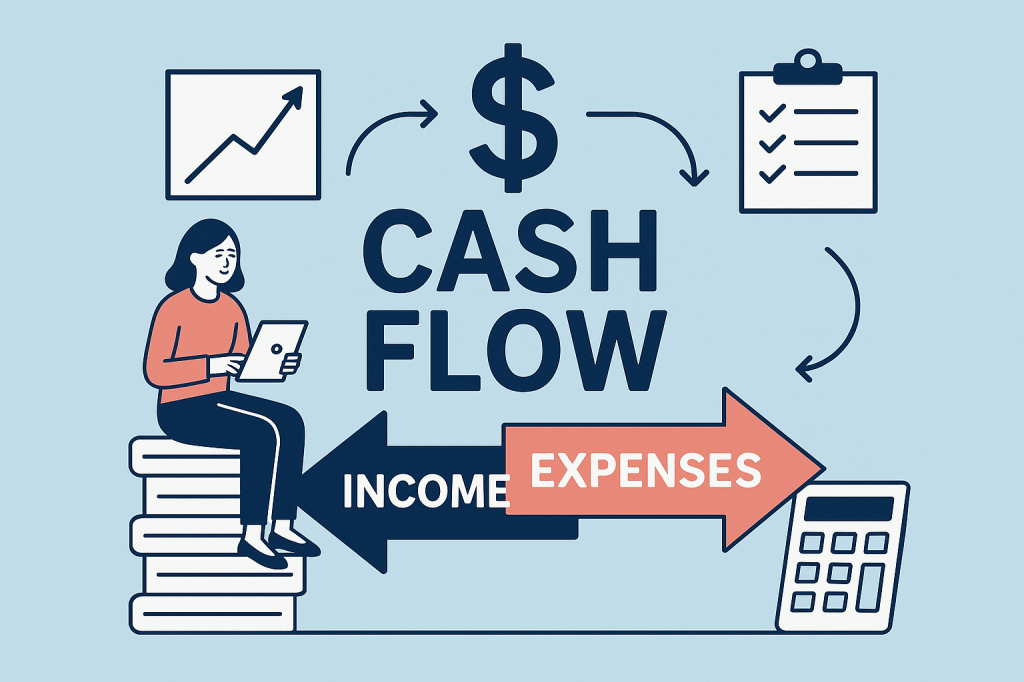
Cash flow is simply the movement of money in and out of your finances.
- Money in: Your income (salary, side hustles, investments, etc.)
- Money out: Your expenses (rent, groceries, bills, subscriptions, etc.)
When you spend less than you earn, you have positive cash flow — which creates room for saving, investing, and breathing easier. When you spend more than you earn, you’re in negative cash flow — which can lead to debt, stress, and missed opportunities.
Why Cash Flow Matters More Than Just “Saving”
While saving is important, it’s a result of good cash flow management. If you don’t know where your money is going, it’s nearly impossible to grow what you have.
Mastering cash flow gives you:
- Control over your spending
- Clarity on where your money is going
- Confidence to make better financial decisions
Think of it as the foundation of financial freedom.
A Simple 4-Step Guide to Master Your Cash Flow
1. Track Everything — Yes, Everything
Start by writing down every dollar you earn and spend. Use a notebook, spreadsheet, or an app whatever works for you. The goal is to get a full picture of your habits.
Tip: Don’t guess — check your bank statements to spot expenses you might forget, like auto-renewing subscriptions.
2. Separate Needs from Wants
Look at your spending and divide it into:
- Essentials (rent, food, utilities)
- Non-essentials (takeout, streaming, impulse buys)
You don’t have to cut all wants but knowing the difference helps you prioritize and adjust when needed.
3. Build a Buffer
Use your positive cash flow to create a small buffer or “cushion” each month. This is how savings begin. Aim for just $50–$100 at first. That consistency adds up fast.
4. Automate What You Can
Automate your savings, bill payments, and even daily spending limits. Automation takes the pressure off and helps you stay on track without constantly thinking about money.
Common Cash Flow Mistakes to Avoid
- Lifestyle creep: As income grows, so do expenses — unless you’re intentional.
- Ignoring small leaks: A few dollars here and there can become hundreds over time.
- Not adjusting when life changes: Your cash flow plan should evolve with your life (new job, moving, family, etc.)
Mastery Isn’t Perfection — It’s Awareness
You don’t have to manage your money flawlessly. Mastery means knowing what’s coming in, what’s going out, and adjusting as you go. When you have that awareness, you stop feeling like money controls you and start feeling like you’re in charge.
Final Word: Control the Flow, Change Your Life
Cash flow isn’t just for businesses or budgeting pros. It’s for everyone who wants to live with less stress and more freedom.
By mastering your personal cash flow, you create the space to save, plan, and thrive — no matter your income level.
Master the flow, and you master your money.
 Cashory